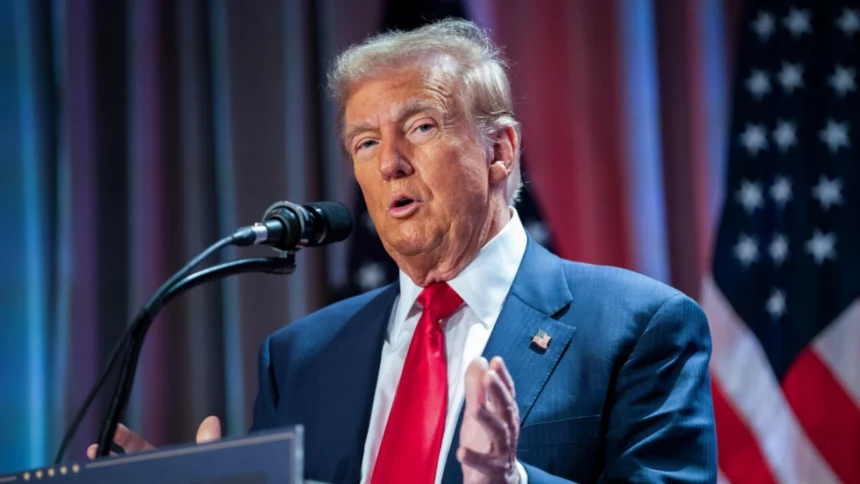
In a move that could deeply impact India’s critical export sectors, US President Donald Trump has warned of raising tariffs on pharmaceuticals imported from India to as high as 200 per cent, while also announcing a 50 per cent tariff on copper, dealing a fresh blow to the country’s export-driven industries. As India negotiates for relief, the threat of these measures looms over the livelihoods connected to these sectors, revealing the growing strain between India and its largest export market.
Donald Trump’s remarks, delivered on Tuesday, are the latest in a series of tariff threats aimed at the BRICS grouping, of which India is a founding member. Donald Trump, who has consistently criticised the alliance, reiterated his intention to impose a blanket 10 per cent tariff on all BRICS nations, accusing them of destabilising the US dollar and acting against American interests.
Impact on India’s Pharma Exports
India’s pharmaceutical sector is likely to face the brunt of these proposed measures. Pharmaceuticals remain one of India’s most valuable export categories, with the US as its largest market. In 2024-25 alone, India exported $9.8 billion worth of medicines to the US, marking a growth of over 20 per cent from the previous year and accounting for 40 per cent of India’s total pharma exports.
The proposed 200 per cent tariff could severely affect this momentum. Donald Trump indicated that the tariff would not be imposed immediately but hinted at a one-year window before these duties are enforced, providing a narrow period for manufacturers and exporters to adjust or seek alternatives. Despite the grace period, Indian exporters fear that such steep tariffs could make them uncompetitive in the world’s largest pharmaceutical market.
The pharmaceutical manufacturing ecosystem in India, spread across hubs in Himachal Pradesh, Telangana, and other states, directly and indirectly employs millions. A significant portion of these exports consists of affordable generic medicines, a sector in which India holds a vital position globally. Donald Trump’s warning signals a potential disruption in the flow of these essential drugs to the US, affecting both Indian exporters and American consumers who rely on cost-effective medicines.
Copper Exports Under Pressure
Alongside pharmaceuticals, copper exports from India are also under threat, with the US set to impose a 50 per cent tariff on copper imports. India exported $2 billion worth of copper in 2024-25, with the US accounting for $360 million of this trade. Copper, crucial for industries like technology, construction, and manufacturing, represents a significant segment of India’s metal exports.
Tariffs on copper could be enforced as early as August 1, unlike the phased implementation for pharmaceuticals. Indian exporters fear that the proposed tariff could reduce their market share in the US and further tighten the margins for a sector already facing price volatility in the global markets. The impact on the copper industry could also ripple into domestic mining and refining sectors, affecting employment and local economies dependent on this trade.
Strained Trade Ties Amid BRICS Friction
Donald Trump’s broader statement against BRICS has added another layer of tension to an already strained trade relationship. The BRICS grouping, which now includes 11 members such as Brazil, Russia, China, South Africa, Egypt, Ethiopia, Iran, Saudi Arabia, UAE, and Indonesia, has frequently been criticised by Donald Trump for undermining the US dollar and American economic interests.
The US president’s statement that BRICS nations would face a 10 per cent blanket tariff underscores his hardline stance on trade and his willingness to escalate economic measures against countries perceived as competitors. For India, which has been actively seeking to stabilise its trade ties with the US, these developments present a challenging scenario, as the country navigates between its strategic position within BRICS and its critical trade partnership with the United States.
India is currently in negotiations with the US, hoping to secure a trade deal that can offset or remove these proposed levies. According to officials familiar with the ongoing talks, discussions have been active for several weeks, focusing on averting the harshest of the proposed measures. However, with Donald Trump reiterating his stance publicly, the path to a resolution remains uncertain.
Donald Trump’s comments reflect a broader trend of protectionist measures, which have become a significant feature of his economic policy. The proposed tariffs come at a time when India is looking to expand its export footprint and create employment opportunities through trade, aligning with its domestic economic goals of manufacturing growth and job creation. The imposition of such tariffs could disrupt these plans, affecting sectors that are central to India’s export economy.
While Donald Trump stated that pharmaceuticals would have a grace period before the 200 per cent tariffs are applied, the copper tariffs, along with the general 10 per cent tariffs on BRICS nations, may be implemented much sooner, signalling immediate challenges for Indian exporters. The situation has left stakeholders across India’s pharmaceutical and copper industries in a state of uncertainty, as they await further developments from the negotiations between New Delhi and Washington.
As the Indian government pushes to resolve these issues through diplomatic channels, the proposed tariffs have emerged as a critical test for India-US trade relations in a global economic environment already fraught with challenges. The coming weeks are likely to determine the trajectory of this dispute and its broader impact on India’s export-dependent sectors.