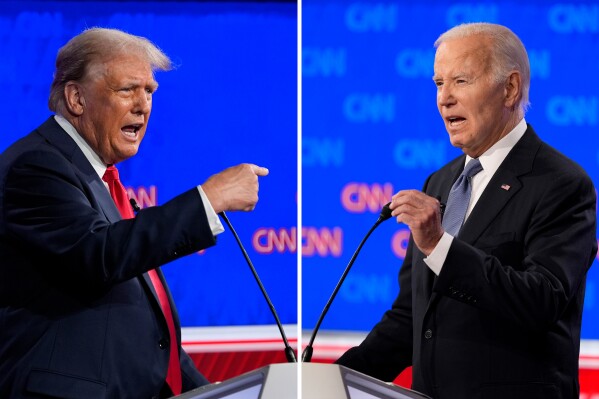
In his first interview since returning to the White House, US President Donald Trump launched a scathing attack on his predecessor, former President Joe Biden, over the decisions made during his tenure. Speaking to Fox News Channel’s Sean Hannity on Wednesday, Donald Trump criticized Joe Biden for issuing multiple pardons for family members and officials on his last day in office. He also addressed his own decision not to pardon himself before leaving office at the end of his first term.
Donald Trump revealed that he was given the option to preemptively pardon himself but declined. “I was given the option, they said, ‘Sir, would you like to pardon everybody, including yourself?'” he said. “I said I’m not going to pardon anybody, we didn’t do anything wrong. And we had people that suffered, they’re incredible patriots.” The remarks were seen as a direct rebuttal to critics who speculated that he might use his presidential powers to shield himself from legal consequences.
During the interview, Donald Trump also spoke about his return to the Oval Office and suggested that he should not have had to run for office again. Reiterating his widely debunked claims about the 2020 election, he argued that if the outcome had been different, many of the crises facing the nation today could have been avoided. “It could have been done, a lot of work could have been done, it would have been over,” he said, lamenting what he called the failures of the Joe Biden administration. He pointed to issues like inflation, the US withdrawal from Afghanistan, the October 7 attack in Israel, and the ongoing war in Ukraine as problems that he believes would not have occurred under his leadership.
Despite his criticisms of the current state of affairs, Donald Trump expressed optimism about the future, stating that the country’s problems are “all solvable.” He touted what he described as a “very unified” Republican caucus in Congress and emphasized that solutions would require time, effort, and financial resources. “We can get our country back,” he asserted. “But if we didn’t win this race, I really believe our country would have been lost forever.”
Donald Trump also addressed the contentious issue of illegal immigration, suggesting that he might have to cut off federal funds to so-called “sanctuary cities.” These municipalities have policies limiting cooperation with federal immigration enforcement, a stance that has long been a point of contention between Republican and Democratic lawmakers. “We’re trying to get rid of them. We’re trying to end them. And a lot of the people in those communities don’t want them,” he said. When asked directly if he would move to cut off their funding, Donald Trump responded, “I might have to do that. Sometimes that’s the only thing you can do.”
The President was also questioned about concerns regarding the popular social media platform TikTok, which has been scrutinized for its Chinese ownership and potential national security risks.Donald Trump appeared to dismiss the concerns, arguing that similar worries could be applied to many other products made in China. “You can say that about everything made in China,” he said. “We have so many things made in China. So why don’t they mention that? The interesting thing with TikTok, though, is you’re dealing with a lot of young people. Is it that important for China to be spying on young people? Young people watching crazy videos and things.” His remarks signaled a shift from his earlier position during his first term when he had pushed for a ban on the app.
Donald Trump also defended his controversial decision to pardon nearly 1,600 individuals involved in the January 6, 2021, Capitol riots. He argued that most of those arrested in connection with the attack were innocent. “Most of the people were absolutely innocent, okay?” he told Hannity. The decision to grant clemency to those involved in the riot has drawn widespread criticism from opponents who see it as an endorsement of the events that unfolded that day.
Donald Trump’s return to the presidency has been marked by intense political division, and his first interview underscored his commitment to reversing many of the policies implemented by the Joe Biden administration. With the 2024 elections behind him, he now faces the challenge of governing a deeply polarized nation while preparing for another contentious term in office.