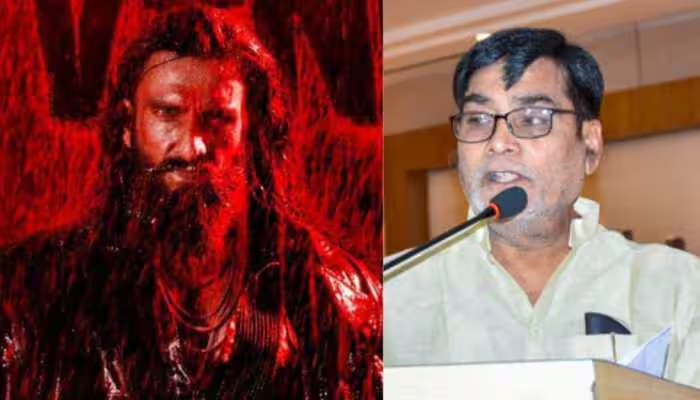
A major controversy has erupted in Uttar Pradesh over the film Dhurandhar: The Revenge, starring Ranveer Singh, after several political leaders strongly objected to its portrayal of events and characters inspired by real-life figures. The film has drawn criticism particularly for depicting a character resembling gangster-politician Atiq Ahmed and suggesting alleged links with Pakistan’s intelligence agency ISI, a claim that critics argue has not been established by any official investigation. The controversy has intensified with sharp reactions from leaders across parties, raising questions about creative freedom, political messaging, and the role of cinema in shaping public perception.
The issue has gained traction in Uttar Pradesh, especially in regions like Saharanpur, where political leaders have openly criticised the film’s narrative. The depiction of demonetisation as a “masterstroke” in the storyline has also triggered strong responses, adding another layer to the ongoing debate. As discussions continue, the film has become a focal point of political and social discourse, reflecting the intersection of cinema and politics in contemporary India.
Political Reactions and Criticism Over Film Narrative
Congress MP Imran Masood strongly criticised the film, calling it “rubbish” and questioning its credibility. He expressed disbelief over the narrative presented in the film, particularly the glorification of demonetisation and the portrayal of events that, according to him, lack factual basis. Masood argued that demonetisation had adverse effects on the economy and rejected the film’s attempt to present it as a successful strategic move. He also raised concerns about the broader intent behind such portrayals, suggesting that they could influence public opinion in a misleading manner.
Former Samajwadi Party MP S. T. Hasan also voiced strong objections, stating that no intelligence agency or police investigation has confirmed any link between Atiq Ahmed and ISI. He questioned the authenticity of the film’s narrative and suggested that controversy might be deliberately created to attract attention and boost viewership. Hasan further alleged that films are increasingly being used as tools for political messaging rather than for conveying meaningful social narratives.
AIMIM leader Waris Pathan criticised the film for allegedly targeting a particular community, drawing parallels with previous controversial films. He argued that such content could contribute to social division and called for stricter scrutiny of films that may promote hatred. His remarks reflect a broader concern among some sections about the potential impact of cinema on communal harmony.
Debate Over Creative Freedom and Political Messaging
The controversy surrounding Dhurandhar has reignited the ongoing debate about the balance between creative freedom and responsible storytelling. Filmmakers often draw inspiration from real-life events, but the extent to which they can fictionalise or reinterpret facts remains a contentious issue. Critics argue that when films depict real or real-inspired characters, they carry a responsibility to ensure that the portrayal does not mislead audiences or distort historical facts.
In the case of Dhurandhar, the depiction of a character resembling Atiq Ahmed, named differently but sharing similar traits, has raised questions about the intent behind such representation. The film reportedly shows the character managing criminal operations even from jail and being linked to cross-border networks. Critics argue that such portrayals, without substantiated evidence, can shape public perception in ways that may not align with reality.
The film also includes a storyline involving demonetisation in 2016, presenting it as a decisive move that foiled a major illegal operation involving fake currency. This narrative has been particularly controversial, as demonetisation remains a highly debated policy decision with differing opinions on its impact. By presenting it in a specific light, the film has entered the realm of political interpretation, further intensifying the debate.
Allegations of Political Timing and Propaganda
Some political leaders have suggested that the timing of the film’s release may not be coincidental. Former MP Rajeev Rai alleged that such films often emerge around election periods to influence public sentiment. He claimed that there is a pattern of releasing politically charged content at strategic times, raising concerns about the use of cinema as a tool for indirect political campaigning.
Religious leaders have also expressed concerns about the film’s content. Maulana Shahabuddin Razvi criticised the trend of creating films that focus on controversial themes to generate attention and revenue. He argued that earlier films aimed to deliver social messages and promote positive change, whereas current trends appear to prioritise sensationalism and profit.
The controversy has also extended to social media, where users have debated the film’s content and intent. Some have questioned specific scenes, including those depicting unrealistic situations, while others have labelled the film as propaganda. The online discourse reflects the broader divide in public opinion, with some defending the film as a work of fiction and others criticising it for alleged bias.
Cinema, Society and the Ongoing Controversy
The Dhurandhar controversy highlights the complex relationship between cinema, politics, and society in India. Films have the power to influence perceptions and shape narratives, making them an important medium of communication. However, this influence also brings responsibility, particularly when dealing with sensitive subjects and real-life inspirations.
As debates continue, the film has become more than just a cinematic release; it has evolved into a topic of political and social discussion. The reactions from various leaders indicate the diverse perspectives on how such content should be approached and regulated. While some advocate for creative freedom, others emphasise the need for accountability and factual accuracy.
The situation also underscores the role of audiences in interpreting and responding to such content. In an era of digital media and widespread information access, viewers are increasingly engaging with films not just as entertainment but as narratives that reflect and influence societal issues.
As the controversy unfolds, it remains to be seen how it will impact the film’s reception and whether it will lead to broader discussions on guidelines for content creation. What is clear, however, is that Dhurandhar has succeeded in sparking a nationwide conversation, highlighting the enduring intersection of cinema and public discourse in India.