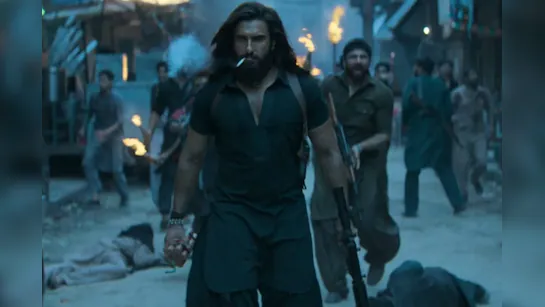
Dhurandhar’s revised theatrical return reflects a conscious attempt to balance unprecedented box office success with social sensitivity.
One of the most talked-about and commercially successful Indian films of 2025, Dhurandhar, is set to make a fresh appearance in cinemas, but with a revised version that reflects changing circumstances around its reception. After enjoying a record-breaking run at the domestic and international box office, the makers have decided to re-release the film in an edited form starting early January 2026. This move comes amid intense public debate, political commentary, and social scrutiny that accompanied the film’s phenomenal success. With earnings crossing ₹1,100 crore worldwide, Dhurandhar has already secured its place among the most commercially successful films in Indian cinema, but its journey has also highlighted the growing complexities filmmakers face when storytelling intersects with contemporary sensitivities.
The decision to reintroduce the film in a modified form is being seen as both pragmatic and symbolic. On one hand, it allows the makers to preserve the film’s mass appeal and theatrical longevity during the lucrative New Year period. On the other, it signals an acknowledgment of concerns raised by sections of the audience and authorities regarding specific words and dialogues. While the core narrative, themes, and action set pieces remain untouched, select verbal elements have been muted or altered, resulting in a version that seeks to maintain the film’s intensity while reducing the scope for controversy.
record-breaking success, narrative strength, and the roots of controversy
Directed by Aditya Dhar, Dhurandhar is a high-octane espionage thriller centred on an Indian intelligence operative infiltrating transnational terror and crime networks. The film blends large-scale action with a fast-paced narrative rooted in national security themes, a combination that resonated strongly with audiences. Its slick production values, stylised action choreography, and tightly constructed screenplay contributed to packed theatres across India and overseas markets, turning it into a cultural talking point soon after its release.
The ensemble cast played a major role in amplifying the film’s appeal. Ranveer Singh led the film with a physically demanding and emotionally charged performance, while Akshaye Khanna, Sanjay Dutt, R. Madhavan, Arjun Rampal, and child actor Sara Arjun delivered performances that added weight and texture to the story. The film’s success was not limited to box office numbers; it also dominated conversations on social media, entertainment platforms, and trade discussions throughout the year.
However, alongside praise came criticism. Certain words and dialogues in the film were accused by some groups of carrying politically sensitive undertones, prompting debates around intent, representation, and narrative responsibility. While supporters defended the film as a work of fiction grounded in genre conventions, critics labelled parts of it as provocative or propagandistic. These debates gradually moved beyond film criticism into wider social and political discussions, placing the makers under increasing pressure to respond.
In this context, the decision to introduce a revised version was shaped by both regulatory guidance and a desire to prevent further escalation of controversy. On December 31, 2025, cinema halls were instructed to replace the existing digital cinema package with the updated version, which came into effect from January 1, 2026. The changes are limited but specific: two words have been completely muted, and one dialogue has been modified. According to those associated with the production, these adjustments do not alter the film’s message or dramatic arc, but aim to ensure that the viewing experience remains focused on storytelling rather than dispute.
revised re-release strategy and the evolving responsibilities of mainstream cinema
The re-release of Dhurandhar in a revised form reflects a broader shift within the Indian film industry, where commercial cinema increasingly operates within a complex ecosystem of audience expectations, regulatory frameworks, and real-time public discourse. In an era of instant reactions and amplified scrutiny, blockbuster films often become more than entertainment products; they turn into cultural events that invite interpretation and contestation from diverse viewpoints.
By opting for a revised theatrical run, the makers of Dhurandhar appear to be striking a careful balance. The strategy allows them to protect the film’s commercial momentum while signalling responsiveness to concerns around sensitivity. Releasing the updated version during the New Year period is also a calculated move, as holiday footfalls traditionally boost theatre attendance. For many viewers who have already seen the film, the revised version offers an opportunity to revisit the story and observe how the changes have been implemented, adding a fresh layer of curiosity.
The move has also reignited discussion around the boundaries of creative freedom and accountability. Filmmakers have long argued that cinema should retain the right to explore difficult or provocative themes, particularly within genres such as espionage and political thrillers. At the same time, the Dhurandhar episode illustrates how commercial success magnifies scrutiny, making high-profile films more vulnerable to criticism. In such cases, even minor elements can acquire disproportionate significance, influencing the film’s public narrative as much as its artistic merits.
Industry observers note that Dhurandhar’s revised release could set a precedent for future big-budget projects. Rather than resorting to outright bans or prolonged legal battles, selective edits and re-releases may emerge as a middle path that allows films to continue their theatrical run while addressing specific objections. This approach, however, also raises questions about where the line should be drawn and how consistently such measures will be applied across different films and contexts.
The discussion around Dhurandhar is further intensified by plans to expand it into a larger franchise. Reports suggest that a second instalment is being prepared for release in March 2026, indicating that the makers view the film not as a standalone success but as the foundation of a broader cinematic universe. The handling of the current controversy will therefore have implications beyond the immediate re-release, shaping audience perception and expectations for future chapters in the franchise.
As Dhurandhar returns to cinemas in its revised form, it occupies a unique space in contemporary Indian cinema. It stands as both a symbol of extraordinary commercial achievement and a case study in how popular films navigate the pressures of public accountability. The re-release underscores a reality that filmmakers increasingly face: success brings visibility, and visibility brings responsibility. In responding to that reality, Dhurandhar’s makers have chosen adaptation over confrontation, signalling a willingness to evolve alongside the audience that made the film a phenomenon.