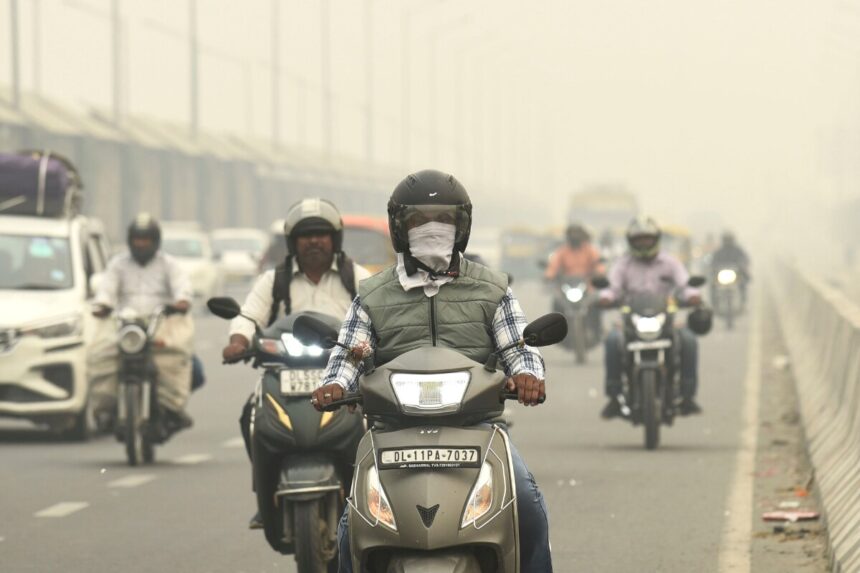
The Delhi High Court is set to hear a crucial plea on Wednesday that calls for immediate, effective and scientifically backed measures to control the city’s dangerously high levels of air pollution. The petition, filed by a major residents’ welfare group, highlights the continued deterioration of Delhi’s ambient air quality and the alarming rise in health-related complications suffered by millions of residents due to prolonged exposure to polluted air. As the national capital enters yet another severe winter pollution phase, the issue has triggered renewed public outcry, legal intervention and concerns over administrative inaction.
Court Transfers the Matter to PIL Bench as Petition Highlights Public Health Emergency
The case came up before Justice Sachin Datta, who observed that the nature of the plea clearly falls within the scope of a Public Interest Litigation. Consequently, the matter was transferred to the division bench headed by Chief Justice Devendra Kumar Upadhyaya and Justice Tushar Rao Gedela, who will now take up the petition for further hearing.
The urgency of the plea stems from Delhi’s rapidly worsening air quality, which has repeatedly entered the categories of “very poor,” “severe” and even “hazardous,” especially during winter months when pollution levels peak. According to the petition, the city’s Air Quality Index has remained critically high over the years, resulting in widespread and persistent health problems across age groups.
Children, senior citizens and individuals with pre-existing medical conditions have been among the worst affected, experiencing a rise in respiratory issues, reduced lung function, aggravated asthma attacks and cardiovascular complications. The petition warns that Delhi’s air has reached levels that threaten not just quality of life but also life expectancy, creating what the petitioners describe as a public health emergency of unprecedented gravity.
The plea argues that the authorities failed to act in a timely manner despite the well-known seasonal pattern of pollution spikes. It claims that government bodies issued “Stage III” emergency measures only after the AQI crossed critical thresholds, and even then, the measures were limited to written notifications rather than concrete field-level enforcement.
This, according to the petitioners, amounts to a “cosmetic response” that shows “complete disregard for the seriousness of the crisis.” The petition also notes that a “red alert” issued by experts on November 21 declared Delhi’s air to be “life-threatening,” yet no commensurate action was taken by agencies responsible for safeguarding citizens’ health.
Representation after representation was filed by civil society groups, but the authorities reportedly remained non-responsive, forcing residents to seek judicial intervention. The petitioners argue that the situation now warrants immediate and scientifically backed interventions that can bring relief both in the short term and through long-term structural solutions.
Petition Targets Multiple Agencies for Failure to Implement Effective Pollution Control Measures
The petition names six major agencies as respondents: the Delhi government, Delhi Pollution Control Committee (DPCC), Central Pollution Control Committee (CPCC), Commission for Air Quality Management (CAQM), Municipal Corporation of Delhi (MCD) and the Delhi Police. According to the plea, each of these bodies plays a vital role in monitoring, managing and reducing pollution levels, yet all have failed to implement necessary measures on the ground.
One of the core allegations is that while numerous guidelines exist on paper, there is a glaring gap in execution. Measures such as controlling construction dust, regulating vehicular emissions, monitoring industrial pollution, restricting firecracker use and enforcing waste management rules are, according to the petitioners, either poorly enforced or entirely ignored until the situation becomes unbearable.
The petition also underscores the need for long-term scientific planning, such as strengthening public transportation, incentivising cleaner fuels, improving waste disposal systems and enhancing inter-state coordination—especially on issues concerning stubble burning. The plea argues that administrative bodies tend to shift responsibility rather than work cohesively to address the root causes of toxic air.
The petitioners further draw attention to statements made in other judicial proceedings, noting that even the Supreme Court has questioned the narrative that blames farm fires alone for pollution spikes. The apex court recently observed that air pollution must be addressed through a holistic approach rather than through political or administrative blame-shifting.
The plea filed by the Greater Kailash-II Welfare Association reflects a growing trend where resident groups, confronted with years of declining air quality, are increasingly turning to courts to push for accountability. They argue that the time for temporary or symbolic measures is over and that the government must adopt immediate and scientifically grounded steps to protect citizens’ health.
As the matter comes up for hearing, the court’s observations and directives will be closely watched, not only by Delhi residents but by environmental groups and policymakers across the country. The issue of air pollution has long been a national concern, but the severity of Delhi’s situation makes it an urgent priority requiring decisive legal and administrative action.