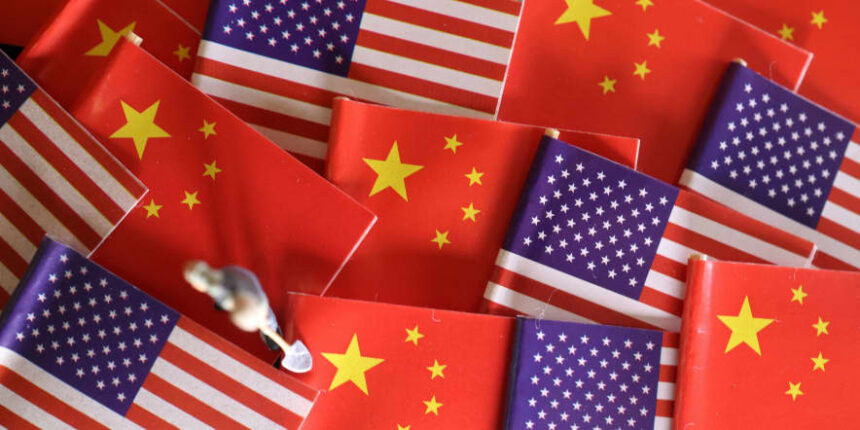
China has announced a new action plan aimed at stabilizing and increasing foreign investment as the country grapples with economic slowdowns and escalating geopolitical tensions. The plan, released on February 19, focuses on easing restrictions in key sectors such as telecommunications and biotechnology while introducing clearer regulations in government procurement to address concerns raised by foreign businesses. The latest initiative comes at a time when foreign direct investment (FDI) in China has seen a significant decline, with official data revealing a 13.4% drop in January alone, following a sharp fall of 27.1% in 2024 and 8% in 2023 after nearly a decade of steady growth.
The 2025 action plan, jointly issued by the Ministry of Commerce and the National Development and Reform Commission through the State Council, underscores China’s intent to enhance investor confidence and sustain economic growth. It proposes a gradual opening of the education and cultural sectors to foreign capital, an area that has historically been tightly regulated. The European Union Chamber of Commerce in China acknowledged the significance of the policy shift, emphasizing that foreign businesses have long sought greater transparency and accessibility in these sectors. Jens Eskelund, the chamber’s president, stated that while the plan outlines promising steps, its effectiveness will depend on how well it is implemented to deliver tangible benefits to businesses operating in China.
China has repeatedly promised market reforms to attract foreign investors, yet skepticism remains due to previous delays in implementing similar initiatives. The latest plan echoes previous commitments to open up healthcare, education, and culture to foreign entities while addressing concerns related to public procurement standards. The chamber of commerce noted that enhanced clarity on procurement requirements could be a major positive development, provided that these measures are fully executed. The American Chamber of Commerce in China also welcomed the move, with its president Michael Hart acknowledging the government’s recognition of foreign businesses’ role in economic growth. However, Hart also urged Chinese authorities to address the fundamental challenges facing foreign enterprises, particularly regarding market access and fair competition.
China’s efforts to bolster FDI come at a time when global companies are increasingly diversifying their manufacturing and sourcing operations away from the country. According to a recent survey conducted by AmCham China, a record number of foreign businesses are considering or have already initiated steps to relocate parts of their supply chain elsewhere. This trend was already evident in the previous year’s survey, which found that foreign companies were facing greater difficulties in generating profits in China compared to the pre-pandemic period. A sluggish post-COVID economic recovery and weaker consumer spending have further compounded these challenges, with retail sales growth remaining in the low single digits over the past few months.
Adding to China’s economic concerns are heightened tensions with the United States, particularly over trade policies and access to advanced technology. The Biden administration has imposed stricter restrictions on Chinese companies seeking to acquire cutting-edge semiconductor technology while maintaining tariffs on a wide range of Chinese goods. In response, China has attempted to strike a delicate balance between retaliating against U.S. trade policies and maintaining an attractive environment for foreign businesses. Analysts from Citi have suggested that Chinese policymakers are wary of directly targeting U.S. multinational corporations, given that foreign investments contribute significantly to the domestic economy by creating jobs, generating tax revenue, and fostering technological advancements.
Among the noteworthy provisions in the new action plan is a proposal to allow foreign companies to use domestic loans for acquiring equity stakes in Chinese firms, a relatively new development in China’s investment landscape. Additionally, the plan seeks to facilitate mergers and acquisitions involving foreign investors, potentially providing a boost to cross-border corporate activities. Legal experts have pointed out that the plan’s success will depend on China’s ability to follow through with its commitments. Beijing-based corporate law partner Xiaojia Sun described the initiative as a “very strong signal” of China’s intent to welcome foreign capital, adding that she expects the government to move forward with implementation given the high-profile nature of the announcement. Sun also highlighted the importance of China’s recent engagement with business leaders, including a rare meeting between President Xi Jinping and prominent entrepreneurs such as Alibaba founder Jack Ma and DeepSeek’s Liang Wenfeng. The February 17 gathering, attended by top executives, was seen as an attempt by the Chinese leadership to rebuild business confidence following years of regulatory crackdowns that had unsettled investors.
Despite these efforts, China’s long-term ability to reverse the declining trend in FDI remains uncertain. Commerce Ministry officials have acknowledged the impact of geopolitical tensions on investment flows, an unusual departure from their usual rhetoric that foreign businesses remain optimistic about China’s economic prospects. Data from the ministry indicates that foreign-invested enterprises account for nearly 7% of employment and 14% of tax revenues in China, underscoring their crucial role in the economy. The latest policy push signals that Chinese authorities are keenly aware of the urgent need to restore investor confidence and prevent further capital outflows.
China’s economic challenges are not confined to the investment sector. The broader slowdown has been reflected in multiple indicators, including the real estate crisis, sluggish manufacturing activity, and declining export growth. In recent months, Beijing has introduced a series of stimulus measures to support domestic demand, but the response from businesses and consumers has been lukewarm. Foreign investors, in particular, have adopted a wait-and-see approach, hesitant to commit new capital until concrete policy actions demonstrate a more predictable business environment.
As the year progresses, the international business community will closely monitor China’s implementation of the action plan to assess whether it translates into meaningful changes for foreign enterprises. While the announcement has been met with cautious optimism, China’s ability to follow through with its commitments will be the ultimate test of its resolve to maintain its status as a global investment hub. With global economic uncertainty and geopolitical risks looming large, China’s success in stabilizing foreign investment will be a crucial factor in shaping its economic trajectory in the coming years.