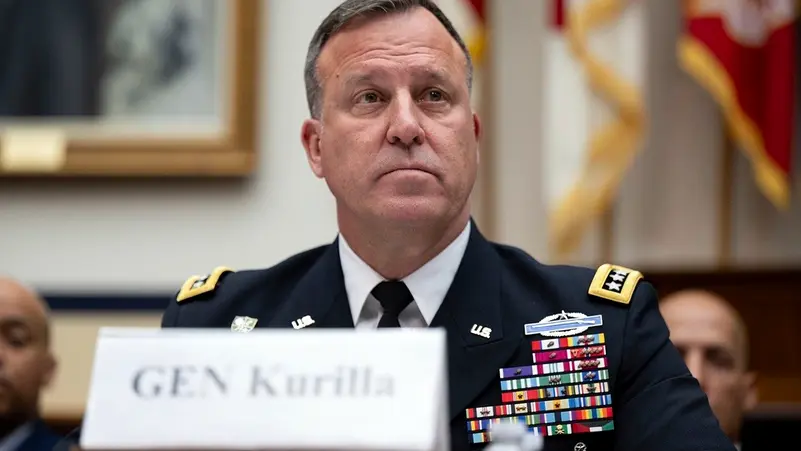
The top US military commander for the Middle East has accused China of fueling Iran’s destabilizing actions across the region by purchasing the vast majority of its oil exports. In testimony before Congress, US Central Command (CENTCOM) chief General Erik Kurilla said that China’s financial support is enabling Tehran to fund militant activities and regional proxies, intensifying instability in the Middle East.
China’s Role in Financing Iran
General Kurilla told the House Armed Services Committee that an estimated 85 to 90 percent of Iran’s oil is currently being bought by China. “So, China is effectively supporting and financing Iran’s malign behavior,” he said. These funds, he emphasized, are funneled to Iran’s Revolutionary Guard Corps-Quds Force (IRGC-QF), which directs Iran’s operations outside its borders, including support for proxy networks across the region.
Kurilla also discussed the impact of American sanctions aimed at curbing this oil trade. He referenced so-called “teapot refineries” along China’s coast that continue to process Iranian oil, despite being under sanctions. “This is 10 percent of all Chinese oil,” Kurilla noted, highlighting the scale of the trade. These ongoing transactions, he argued, effectively dilute the pressure intended by international sanctions.
Security Concerns for US Troops in the Region
General Kurilla also expressed concern over the potential consequences of an Israeli military strike on Iran’s nuclear facilities. He warned that such an attack could significantly endanger US forces stationed throughout the Middle East. “Iran’s ballistic missile and drone capabilities are the main threats to US personnel and interests,” he stated.
While emphasizing the importance of diplomacy, Kurilla confirmed that he had provided the Trump administration with a “broad range of options” should negotiations on a renewed nuclear deal with Iran break down. His remarks reflect the Pentagon’s increasing worry over Iran’s expanding regional influence, made possible in part by its economic ties with China.
The hearing underscores growing tensions not only between the US and Iran, but also highlights Washington’s concerns over Beijing’s strategic engagements in the Middle East, which US officials believe are undermining efforts to maintain stability in the region.