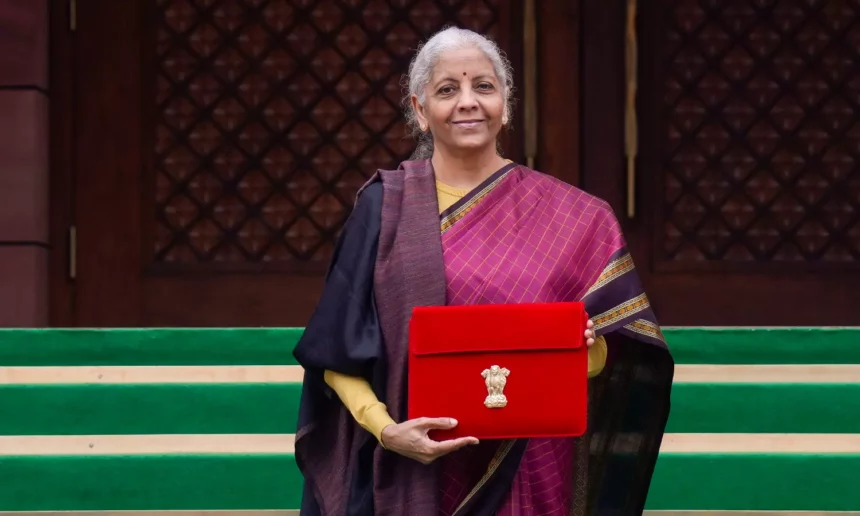
India’s Union Budget for 2026–27, presented by Finance Minister Nirmala Sitharaman, is framed as a forward-looking policy document designed to steer the country through global uncertainty while sustaining high growth and inclusion. Delivered against the backdrop of economic disruptions, shifting trade dynamics, and rapid technological change, the budget reflects the government’s intent to combine fiscal discipline with bold reforms. Sitharaman underlined that the choices made over the past decade—anchored in stability, prudence, and sustained public investment—have positioned India to pursue ambitious national goals without compromising macroeconomic resilience.
Reform Momentum and the Architecture of Sustainable Growth
At the heart of Budget 2026–27 lies a reaffirmation of reform-led governance. The finance minister stressed that India’s economic trajectory over the last twelve years has been shaped by conscious policy decisions that favoured action over hesitation and reform over rhetoric. Fiscal discipline, moderate inflation, and sustained growth have been pursued even during periods of global volatility, creating a foundation for long-term confidence. The budget seeks to accelerate this momentum by reinforcing structural reforms while adapting them to emerging domestic and international challenges.
A central theme of the budget is the concept of “kartavya,” or duty, which Sitharaman described as the guiding philosophy behind policy priorities. The first of these duties is to accelerate and sustain economic growth by enhancing productivity, competitiveness, and resilience. This approach recognises that India operates in a world where multilateralism is under strain, supply chains are fragmented, and access to critical resources is increasingly contested. Rather than retreating inward, the budget positions India as a deeply integrated global economy that must export more, attract stable long-term capital, and remain agile in response to external shocks.
Public investment continues to serve as a key growth engine in this strategy. By maintaining a strong thrust on capital expenditure, the government aims to crowd in private investment, strengthen infrastructure, and support job creation. The emphasis on atmanirbharta is reflected not as isolationism but as strategic self-reliance—building domestic manufacturing capacity, securing energy needs, and reducing dependence on critical imports while remaining globally connected.
The budget also underscores the importance of a supportive ecosystem for reforms. Sitharaman highlighted three essential pillars: continuous and adaptive structural reforms, a robust and resilient financial sector, and the deployment of cutting-edge technologies for governance. The financial system is expected to play a central role in mobilising savings, allocating capital efficiently, and managing risks, while emerging technologies such as artificial intelligence are envisioned as force multipliers that can improve service delivery and policy outcomes.
This reform orientation is captured in the idea of the “Reform Express,” a phrase used to describe the pace and scale of changes underway. Following the Prime Minister’s Independence Day announcement in 2025, more than 350 reforms have been rolled out, ranging from GST simplification and labour code notifications to the rationalisation of quality control orders. The central government, in coordination with states, is working to reduce compliance burdens and deregulate processes, with the objective of improving ease of doing business and unlocking productivity gains across sectors.
Manufacturing occupies a pivotal position in this reform framework. Budget 2026–27 proposes targeted interventions to scale up manufacturing across strategic and frontier sectors, rejuvenate legacy industries, and create globally competitive “champion MSMEs.” By combining sector-specific incentives with broader regulatory reforms, the government aims to position manufacturing as a driver of employment, exports, and technological advancement.
Strategic Sectors, Human Capital, and India’s Global Integration
A defining feature of Budget 2026–27 is its focus on strategic sectors that are expected to shape India’s economic future. The finance minister outlined plans to scale up manufacturing in seven key areas, reflecting both current needs and long-term priorities. Initiatives such as Biopharma Shakti seek to establish India as a global hub for biologics and biosimilars, responding to a shifting disease burden and rising demand for affordable, high-quality healthcare solutions. Investments in pharmaceutical education, clinical trial infrastructure, and regulatory capacity are designed to align domestic capabilities with global standards.
Similarly, the expansion of the India Semiconductor Mission marks a recognition of semiconductors as a foundational technology for modern economies. By moving beyond assembly to focus on equipment, materials, and full-stack intellectual property, the budget aims to deepen India’s role in global semiconductor value chains. Complementary support for electronics components manufacturing and container manufacturing further reflects an integrated approach to building industrial ecosystems rather than isolated capacities.
Resource security also features prominently in the budget narrative. Proposals to develop rare earth corridors and support mineral-rich states highlight the strategic importance of critical minerals in clean energy, electronics, and advanced manufacturing. By encouraging mining, processing, research, and manufacturing within a coordinated framework, the government seeks to reduce vulnerabilities arising from global supply disruptions while creating new avenues for regional development.
Alongside industrial strategy, the budget places strong emphasis on human capital and inclusion. Sitharaman described the budget as being inspired by ideas emerging from the Viksit Bharat Young Leaders Dialogue, reinforcing its identity as a youth-driven exercise. Policies aimed at employment generation, skill development, and entrepreneurship are intended to ensure that growth translates into opportunities for India’s expanding workforce.
Women’s economic participation is positioned as both a social imperative and a growth strategy. With over 100 million women already connected through self-help groups, the budget focuses on strengthening women-led economic systems and expanding access to education and employment infrastructure. Proposals such as building girls’ hostels in every district are framed as long-term investments that can enhance participation in education and the workforce, thereby strengthening the productive base of the economy.
Agriculture and allied sectors also receive targeted attention, reflecting the government’s commitment to inclusive growth. By prioritising dairy and supporting farmers engaged in crops such as coconut, cashew, and cocoa, the budget aims to promote diversification, value addition, and income stability in rural areas. Digital initiatives that provide farmers with information in local languages are intended to bridge knowledge gaps and improve decision-making at the grassroots level.
Fiscal strategy remains a balancing act throughout the budget. Sitharaman emphasised the importance of reducing the fiscal deficit while sustaining high levels of capital expenditure and growth. This calibrated approach is presented as essential for maintaining macroeconomic stability, preserving investor confidence, and enhancing India’s credibility in global markets. As India’s trade and capital needs expand, the budget seeks to ensure that global integration supports domestic priorities rather than undermining them.
In this context, international engagement is viewed as an opportunity rather than a constraint. The finance minister noted that India’s evolving global partnerships, including agreements with the European Union, have informed budgetary priorities with the aim of ensuring that the benefits of global integration accrue to Indian citizens, particularly the youth. By aligning domestic reforms with international opportunities, Budget 2026–27 aspires to position India as a confident, competitive, and inclusive global economy.