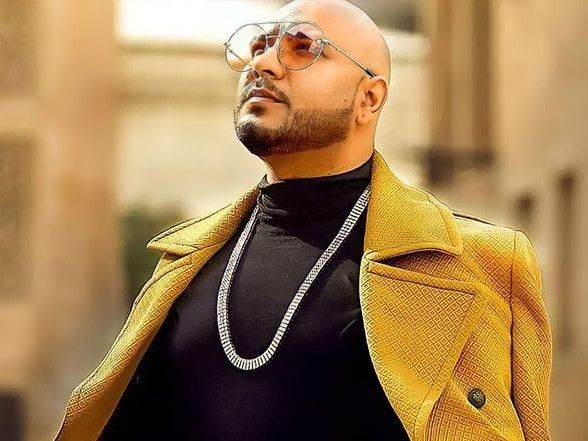
Popular Punjabi and Bollywood singer B Praak has reportedly received a serious death threat involving a ransom demand of ₹10 crore, triggering concern across the music industry and prompting a police investigation. The threat allegedly originated from an individual claiming links to the Lawrence Bishnoi gang and was communicated indirectly through fellow Punjabi singer Dilnoor. The matter has since been reported to the Mohali police, who have taken cognisance of the complaint and begun preliminary inquiries into the source and credibility of the threat.
The incident has raised fresh questions about the safety of public figures and the growing trend of extortion threats targeting celebrities. While no harm has been reported, the explicit nature of the alleged warning and the use of the Bishnoi gang’s name have added gravity to the case. Authorities are now working to trace the overseas calls and verify whether the threat has any organised crime backing or was intended to intimidate through fear alone.
Threat call to Dilnoor sparks police complaint and security concerns for B Praak
According to the complaint filed with the Mohali police, the sequence of events began on January 5, when Punjabi singer Dilnoor received two missed calls from an international number. At the time, Dilnoor did not answer the calls, as the number was unfamiliar. Shortly afterward, he allegedly received a voice message that contained a ransom threat directed at his close associate and collaborator, B Praak.
In the purported audio message, the caller demanded that B Praak pay ₹10 crore within a week, warning of serious consequences if the demand was not met. The caller reportedly identified himself as Arju Bishnoi and claimed to be associated with the Lawrence Bishnoi gang, a name that has previously surfaced in high-profile criminal and extortion cases. The explicit mention of a deadline and the threat of violence heightened the seriousness of the message.
The following day, January 6, Dilnoor allegedly received another call from a different overseas number. He answered briefly but disconnected the call after finding the conversation suspicious. Concerned by the repeated contact and the content of the earlier voice message, Dilnoor approached the police and submitted a formal complaint to the Senior Superintendent of Police in Mohali.
In his complaint, Dilnoor stated that he was instructed to pass on the threat to B Praak, making him an unwilling intermediary in the alleged extortion attempt. He also provided details of the phone numbers used, the timing of the calls, and the content of the voice message. Police officials have confirmed that the complaint has been registered and that the matter is being treated with seriousness, given the potential risk involved.
Investigators are now focused on tracing the origin of the overseas calls and verifying the identity of the caller. Cybercrime units are expected to assist in tracking the numbers and analysing whether the threat is genuine, part of an organised extortion attempt, or an isolated act meant to create fear by invoking a notorious gang name. Police have not yet officially confirmed any link to the Lawrence Bishnoi gang, and the investigation remains at an early stage.
The incident has inevitably raised concerns about security arrangements for B Praak. While there has been no official statement on enhanced protection, such cases often prompt informal reviews of personal security, especially when threats involve explicit financial demands and timeframes. Fans and industry colleagues have expressed unease, recalling similar threats made to other public figures in recent years.
Who is B Praak and why the threat has shaken music industry circles
B Praak, born Pratik Bachan in Chandigarh in 1986, is one of the most influential and recognisable voices in contemporary Punjabi and Hindi music. He began his career as a music producer, crafting successful Punjabi tracks before transitioning into singing, a move that dramatically expanded his popularity and reach. Over the years, he has built a reputation for emotionally charged songs that resonate deeply with audiences across linguistic and regional boundaries.
His breakthrough as a singer came with “Mann Bharrya,” a song that became a cultural phenomenon and established him as a leading artist in the industry. The track’s success marked a turning point in his career, opening doors to mainstream Bollywood projects and national recognition. B Praak’s frequent collaboration with lyricist Jaani has resulted in a string of chart-topping songs that blend poignant lyrics with soulful compositions.
Among his most celebrated works are “Teri Mitti” from the film *Kesari*, which earned widespread acclaim for its patriotic emotion, as well as “Filhall,” “Pachtaoge,” “Ranjha” from *Shershaah*, “Maana Dil,” and “Kesariyo Rang.” These songs have not only dominated music charts but have also become staples at public events, weddings, and national celebrations, further cementing his mass appeal.
The alleged threat has therefore sent shockwaves through the music community, as B Praak is widely regarded as a low-profile artist who focuses primarily on his work rather than controversy. Industry peers have privately expressed concern over the increasing vulnerability of celebrities to extortion attempts, particularly those involving overseas calls and the misuse of notorious gang names to instil fear.
The mention of the Lawrence Bishnoi gang has added a layer of anxiety because of the gang’s perceived notoriety and past media coverage. Even unverified claims of association can have a chilling effect, both on the targeted individual and on the broader industry. However, law enforcement officials have cautioned against jumping to conclusions until the investigation establishes whether the claim of gang involvement has any factual basis.
For now, B Praak has not made a public statement on the matter, and neither has his management issued an official response. Police have indicated that more details are likely to emerge as call records are analysed and the investigation progresses. Until then, the case serves as a reminder of the pressures faced by high-profile artists and the need for robust mechanisms to address threats and protect individuals from criminal intimidation.