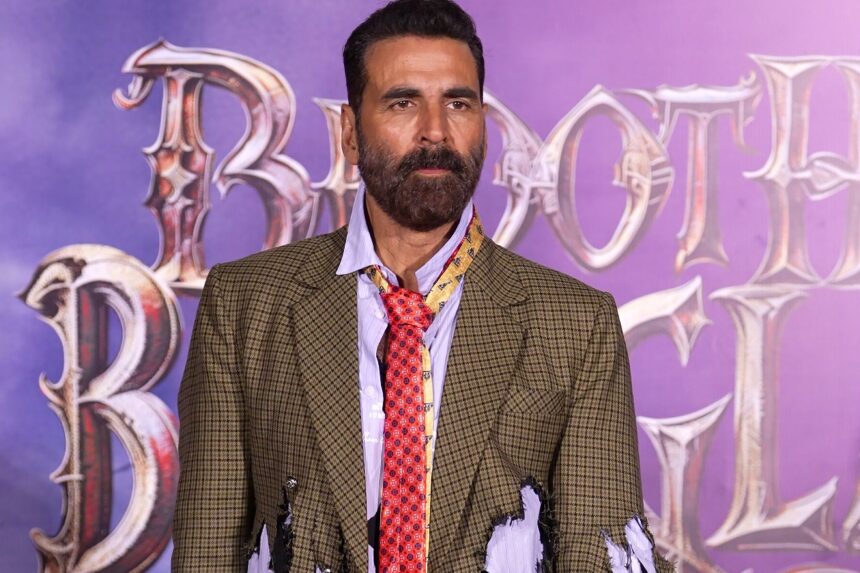
The recent injury sustained by Akshay Kumar on the sets of his upcoming film Bhooth Bangla has once again brought into focus the physical risks actors undertake in pursuit of cinematic authenticity, while simultaneously exposing the strategic complexities that shape film release decisions in today’s competitive box office environment. Known for performing his own stunts and maintaining a reputation for discipline and physical commitment, Akshay Kumar’s accident during a high-intensity action sequence has sparked concern among fans and industry insiders alike.
The incident reportedly occurred while filming a stunt involving a jump kick, during which the actor lost balance upon landing and suffered an injury. A behind-the-scenes clip circulating online captured the moment, amplifying public attention and raising questions about safety protocols on film sets. While the extent of the injury has not been officially detailed in full, the development has had immediate implications not only for the production schedule but also for the film’s carefully planned release strategy.
At the same time, the delay in the film’s release—reportedly influenced by both the injury and broader market considerations—reflects a deeper shift in how Bollywood navigates competition, timing, and audience engagement in an increasingly crowded entertainment landscape.
High-Risk Stunts And The Enduring Culture Of Physical Commitment In Bollywood
Akshay Kumar’s injury is not an isolated incident but part of a long-standing culture within Bollywood where leading actors often perform their own stunts to enhance realism and audience appeal. Over the years, Kumar has built a brand around his action-oriented roles, frequently opting to execute physically demanding sequences without relying heavily on body doubles. This commitment has contributed significantly to his on-screen credibility but also exposes him to inherent risks.
The incident on the set of Bhooth Bangla underscores the fine balance between authenticity and safety. As action sequences become increasingly complex, the margin for error narrows, making even minor miscalculations potentially dangerous. The use of advanced choreography, safety harnesses, and rehearsals has undoubtedly improved over time, yet accidents continue to occur, reminding the industry of the unpredictable nature of such performances.
The broader question that emerges is whether the industry needs to reassess its approach to stunt execution. While audiences appreciate realism, there is a growing argument for prioritizing safety through greater reliance on technology, including visual effects and professional stunt doubles. However, this shift is not without its challenges, as it may alter the perception of authenticity that actors like Akshay Kumar have cultivated over decades.
Moreover, the visibility of such incidents in the digital age amplifies their impact. A behind-the-scenes clip that might once have remained internal now becomes viral content, shaping public discourse and influencing audience sentiment. In this context, the injury becomes more than a production setback—it becomes part of the film’s narrative even before its release.
Release Strategy, Box Office Competition, And The Changing Economics Of Film Scheduling
Beyond the injury itself, the decision to shift the release of Bhooth Bangla highlights the strategic calculations that define modern film distribution. Initially slated for an earlier release, the film’s schedule has been adjusted, reportedly to avoid direct competition with other major releases, including the blockbuster success of Dhurandhar 2.
In an era where box office performance is increasingly front-loaded, the timing of a film’s release can significantly influence its overall success. A clash with a high-performing film can dilute audience attention, reduce screen availability, and ultimately impact revenue. By postponing the release, the makers of Bhooth Bangla aim to maximize visibility and ensure a more favorable market environment.
This strategy reflects a broader trend in Bollywood, where release calendars are meticulously planned to avoid overlap with major productions. The stakes are particularly high for films like Bhooth Bangla, which combine significant production budgets with expectations of mass appeal. The involvement of established names, including director Priyadarshan and a star-studded cast, further elevates these expectations.
At the same time, the shift also points to the growing influence of box office momentum in shaping industry decisions. The success of films like Dhurandhar 2 creates ripple effects across the release schedule, forcing other productions to adapt in real time. This dynamic underscores the interconnected nature of the film industry, where the performance of one project can influence the trajectory of several others.
Additionally, the evolving role of OTT platforms adds another layer of complexity. With digital rights becoming a significant revenue stream, filmmakers must consider not only theatrical performance but also post-release viewership. The timing of a theatrical release can impact negotiations with streaming platforms, further emphasizing the importance of strategic planning.
The case of Bhooth Bangla also highlights the importance of maintaining audience anticipation. Delays, while sometimes necessary, carry the risk of diminishing excitement if not managed carefully. However, they can also serve as an opportunity to build momentum through marketing and promotional activities, ensuring that the film remains in public consciousness.
As Bollywood continues to navigate these challenges, the interplay between creative ambition, physical risk, and strategic decision-making becomes increasingly evident. The injury to Akshay Kumar and the subsequent release shift of Bhooth Bangla serve as a microcosm of these broader dynamics, illustrating how individual incidents can intersect with larger industry trends.