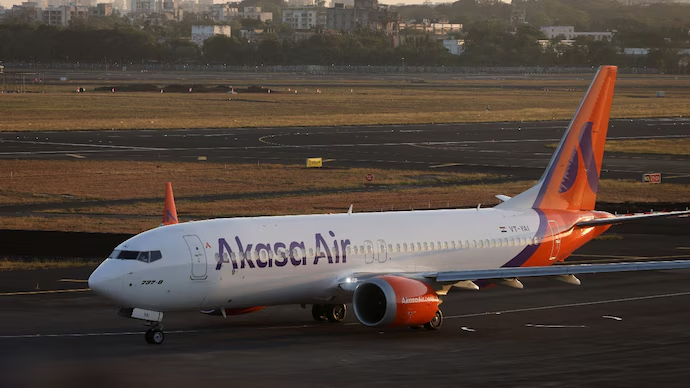
Akasa Air has announced a fuel surcharge on domestic and international flight tickets, becoming the latest airline to increase airfares amid a sharp rise in jet fuel prices. The Mumbai-based low-cost carrier stated that the surcharge will range between ₹199 and ₹1,300 depending on the distance of travel. The revised pricing will apply to all bookings made from 00:01 hours on March 15, 2026.
The move follows similar decisions by other major Indian airlines, including Air India and IndiGo, which recently introduced fuel surcharges or increased fares in response to rising aviation turbine fuel costs. Airlines say the increase in operational expenses caused by global energy market disruptions has made it necessary to adjust ticket prices.
Fuel costs represent one of the largest expenses for airlines, and sudden increases can significantly affect profitability. By introducing a surcharge rather than permanently raising base fares, airlines attempt to offset rising costs while maintaining some flexibility to revise pricing if fuel markets stabilise in the future.
Akasa Air confirmed that the surcharge will vary depending on the length of the flight, meaning passengers travelling longer routes may face higher additional charges. The airline also indicated that it will continue to monitor changes in fuel prices and adjust the surcharge if market conditions change.
Airlines Respond to Rising Aviation Fuel Costs
The decision by Akasa Air comes shortly after other major carriers in India introduced similar measures. IndiGo had earlier announced that it would impose a fuel surcharge on both domestic and international tickets starting March 14. The airline said the surcharge would range from ₹425 to ₹2,300 depending on the distance of travel.
According to the airline, the surcharge was introduced to manage the impact of rapidly increasing aviation turbine fuel prices. IndiGo noted that the surcharge had been structured according to travel distance in order to minimise the burden on passengers while still helping offset rising operational expenses.
Air India has also revised its ticket prices due to higher fuel costs. From March 12, the airline began charging an additional ₹399 on domestic flight tickets. For international flights, Air India increased ticket prices by around 15 percent, citing rising fuel expenses as the primary reason.
The adjustments by these airlines highlight the broader financial pressure currently facing the aviation sector. Fuel accounts for a significant portion of airline operating costs, and sudden price spikes can affect the entire industry simultaneously.
Airlines often respond to such situations by introducing fuel surcharges that can later be adjusted or removed depending on changes in the energy market. This approach allows airlines to manage short-term cost fluctuations without making permanent changes to base fares.
Industry observers note that when multiple airlines introduce similar surcharges within a short period, it typically reflects widespread cost pressures rather than isolated decisions by individual carriers.
Global Oil Supply Disruptions and Impact on Aviation
The recent increase in aviation fuel prices has been linked to rising global crude oil prices triggered by geopolitical tensions in West Asia. Ongoing conflict involving Iran, the United States and Israel has created uncertainty in global energy markets and disrupted oil supply routes.
One of the key concerns affecting oil markets is the impact on shipping routes through the Strait of Hormuz, one of the world’s most important energy corridors. A significant portion of global oil shipments passes through this route, and any disruption can lead to rapid price increases in international markets.
Due to these tensions, jet fuel prices have reportedly risen by nearly 85 percent in recent weeks. As airlines rely heavily on aviation turbine fuel for operations, such increases quickly translate into higher operating costs.
The rise in crude oil prices has been reflected in the global benchmark Brent crude, which is currently trading around $103 per barrel after recently approaching $120 per barrel during peak volatility in the market.
For the aviation industry, these developments create immediate financial challenges. Airlines must balance the need to maintain affordable ticket prices with the necessity of covering increased fuel expenses.
Higher airfares can potentially affect passenger demand, particularly in price-sensitive markets. As a result, airlines often attempt to structure surcharges carefully so that they recover part of the additional cost while avoiding a sharp decline in travel demand.
The situation also highlights the interconnected nature of global geopolitics and transportation industries. Conflicts in major oil-producing regions can quickly influence fuel prices, which in turn affect airlines, shipping companies and consumers around the world.
For passengers, the introduction of fuel surcharges by airlines means that ticket prices may rise in the short term until energy markets stabilise. Airlines have indicated that the surcharges will remain under review and may be adjusted if jet fuel prices decline in the coming months.