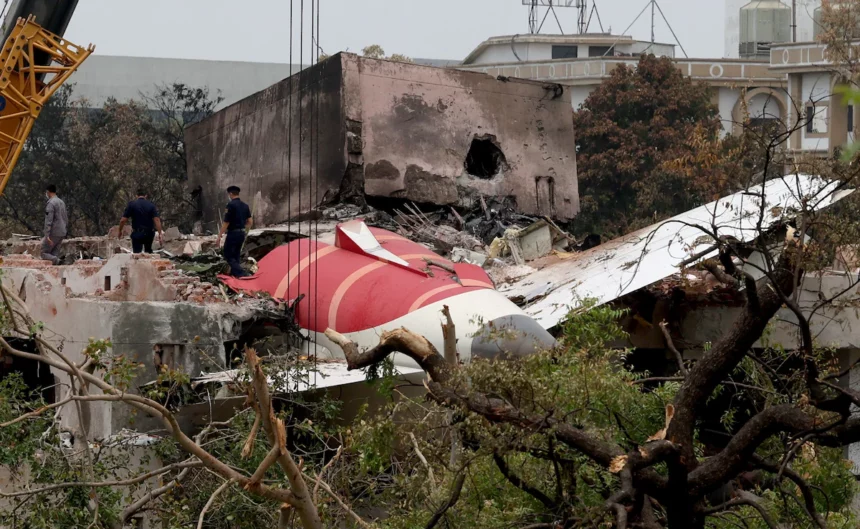
India is awaiting the preliminary report on the tragic June 12 Air India crash that killed over 250 people, with the findings likely to be released today or in the coming days. Investigators have narrowed their focus to fuel control switches and engine thrust issues, amid growing scrutiny over the incident, as the country decodes black box data domestically for the first time.
According to Reuters, officials from India’s Aircraft Accident Investigation Bureau (AAIB) informed a parliamentary panel that the preliminary report is nearly ready for public release. However, there is no official confirmation on the exact timing of its release.
Fuel Switches and Engine Thrust Under Spotlight
The Wall Street Journal reported that investigators are closely examining the actions of the jet’s pilots in the moments before the crash, with no immediate evidence pointing to design flaws in the Boeing 787 Dreamliner aircraft. A parallel Reuters report highlighted that the investigation has zeroed in on the fuel control switches’ movement and engine thrust anomalies that may have contributed to the crash.
The tragic incident involved Air India flight AI171, a Boeing 787-8 Dreamliner bound for London, which crashed shortly after takeoff from Ahmedabad’s Sardar Vallabhbhai Patel International Airport. The crash is among India’s worst air disasters in decades, prompting intense scrutiny of Air India’s operational practices and safety protocols.
Progress on Black Box Data and Compensation
During a parliamentary panel meeting on aviation, AAIB officials revealed they had successfully recovered and extracted “good data” from the aircraft’s black boxes, which include the cockpit voice recorder (CVR) and flight data recorder (FDR). These devices were retrieved in the days following the crash, one from a rooftop on June 13 and another from debris on June 16, allowing investigators to piece together the aircraft’s final moments.
This marks the first instance where India is decoding black box data within the country, reflecting the growing technical capabilities of Indian aviation authorities. The investigation team comprises AAIB’s Director General, experts from the Indian Air Force, Hindustan Aeronautics Limited (HAL), and the US-based National Transportation Safety Board (NTSB), alongside aviation medicine and air traffic control specialists.
Air India, owned by Tata Group, has faced intense public and regulatory pressure since the crash. CEO Campbell Wilson has appeared before the parliamentary committee to provide updates on post-crash measures and the airline’s cooperation with ongoing investigations. The airline confirmed that compensation has been paid to the families of nearly two-thirds of the victims, while Tata Sons is establishing a mechanism to provide longer-term support to the families and survivors impacted by the tragedy.
As the country awaits the preliminary findings, the focus on fuel control switches and engine thrust issues could shape the direction of accountability and safety improvements in India’s aviation ecosystem, ensuring that the lessons from this devastating crash lead to safer skies.