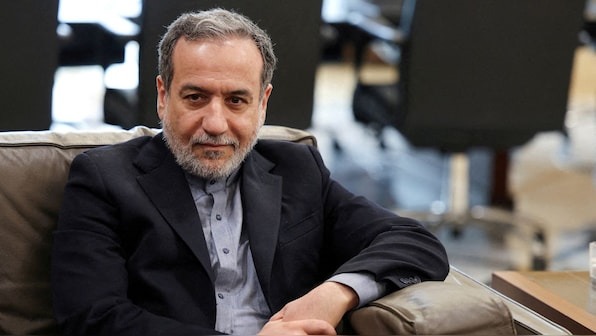
Abbas Araghchi, a veteran Iranian diplomat, is once again at the helm of high-level negotiations with the United States, focusing on one of the world’s most pressing geopolitical issues: Iran’s nuclear program.
Amid rising regional tensions, the negotiations come at a critical time when tensions between Washington and Tehran have escalated. The threat of military escalation is more pronounced than in recent years, with both countries grappling with the broader consequences of the standoff.
Who is Abbas Araghchi?
Born in 1962 in Tehran to a well-established religious merchant family from Isfahan, Abbas Araghchi witnessed Iran’s 1979 Islamic Revolution firsthand as a teenager. Inspired by the events that brought down the monarchy, he joined the Islamic Revolutionary Guard Corps (IRGC) shortly thereafter, dedicating himself to defending the nascent Islamic Republic.
During the Iran-Iraq War (1980-1988), Araghchi served on the frontlines, further solidifying his connection to the state’s military and political structures. In 1989, he entered the Iranian Foreign Ministry, starting a long diplomatic career that would span ambassadorial roles in Finland (1999–2003) and Japan (2007–2011), as well as numerous other influential posts in Tehran.
In 2013, Araghchi was appointed deputy foreign minister, later becoming the spokesperson for the Ministry of Foreign Affairs. Known for his composed demeanor, technical expertise, and fluency in English, Araghchi gained a reputation as a pragmatic and skilled diplomat. His academic credentials include a degree in international relations from Iran’s Faculty of International Relations, a master’s degree in political science from Islamic Azad University, and a doctorate in political thought from the University of Kent in the UK.
Araghchi has served under various Iranian administrations, whether reformist, moderate, or hardline, maintaining a non-partisan stance while consistently aligning with the core principles of the Islamic Republic. He has developed strong relationships with the supreme leader, the Revolutionary Guards, and all major political factions within Iran, making him an influential figure in Iranian diplomacy.
Architect of the 2015 Nuclear Deal
Araghchi was one of the key architects of the 2015 Joint Comprehensive Plan of Action (JCPOA), the landmark nuclear agreement between Iran and six world powers. The deal placed significant limitations on Iran’s nuclear enrichment activities in exchange for sanctions relief, which was seen as a crucial diplomatic achievement for the Islamic Republic.
Western diplomats who were involved in the negotiations described Araghchi as serious, technically knowledgeable, and straightforward. However, the US unilaterally abandoned the deal in 2018 under President Donald Trump, reinstating broad economic sanctions on Iran, which led to a rapid acceleration of Iran’s nuclear activities.
Despite the collapse of the agreement, Araghchi continued to play a role in indirect negotiations aimed at reviving the deal, though his position was eventually supplanted by a more hardline diplomat. Araghchi’s influence persisted, and he was later appointed as the Secretary of Iran’s Strategic Council on Foreign Relations, a powerful advisory body reporting directly to Supreme Leader Ayatollah Ali Khamenei.
Araghchi’s Return to High-Level Diplomacy
Araghchi’s return to frontline diplomacy came after the election of President Masoud Pezeshkian in 2024, who vowed to re-engage with the West. With full authorization from the Supreme Leader, Araghchi now leads Iran’s delegation in the upcoming nuclear talks with the US, scheduled to take place in Oman.
As a seasoned diplomat with a deep understanding of the nuclear issue, Araghchi is considered one of the most powerful foreign ministers in the Islamic Republic’s history. His authority comes directly from the Supreme Leader, and his pragmatic approach to diplomacy is seen as crucial for navigating the complex landscape of international negotiations over Iran’s nuclear ambitions.
A Trusted Negotiator with Broad Influence
Araghchi’s ability to avoid partisan conflicts has earned him respect both within Iran and internationally. This non-partisan approach has allowed him to navigate difficult negotiations and engage with all factions within the Iranian government without becoming entangled in internal political infighting.
In a recent interview, Araghchi acknowledged that the 2015 JCPOA, while a successful framework, can no longer be fully applied due to advancements in Iran’s nuclear program. However, he emphasized that the agreement still serves as a valuable basis for future negotiations.
At 62, Araghchi has become synonymous with Iran’s nuclear diplomacy. Despite his professional prominence, his personal life has largely remained private, with little attention given to his family, which includes two sons and a daughter from his first marriage, and another daughter from his second marriage.
The Oman Talks: A Critical Moment
The upcoming talks in Oman will be pivotal for the future of Iran-US relations and the broader Middle East. While the US insists that the negotiations will be direct, Iran maintains that they will be conducted indirectly. Araghchi will face off against US envoy Steve Witkoff, a former real estate executive with no prior diplomatic experience.
The stakes are high, with both sides having a long history of mutual distrust. Araghchi’s experience, combined with the authority he holds, will be crucial in determining whether these talks can lead to a breakthrough or yet another deadlock.
The timing of the talks is significant. With the Middle East in turmoil, including ongoing wars in Gaza, Lebanon, and Yemen, as well as escalating tensions between Iran and Israel, the need for a diplomatic resolution to Iran’s nuclear issue has never been more urgent. US President Donald Trump’s return to office has added a layer of complexity, with his “maximum pressure” strategy potentially derailing any prospects for an agreement.
Despite the tension, Iran has expressed cautious openness to talks, presenting the US with a “genuine chance” for diplomacy, though it has warned that any military action would lead to severe consequences.
These talks in Oman could either signal the beginning of a new chapter in Iran-US relations or mark yet another failure in their long-standing standoff.