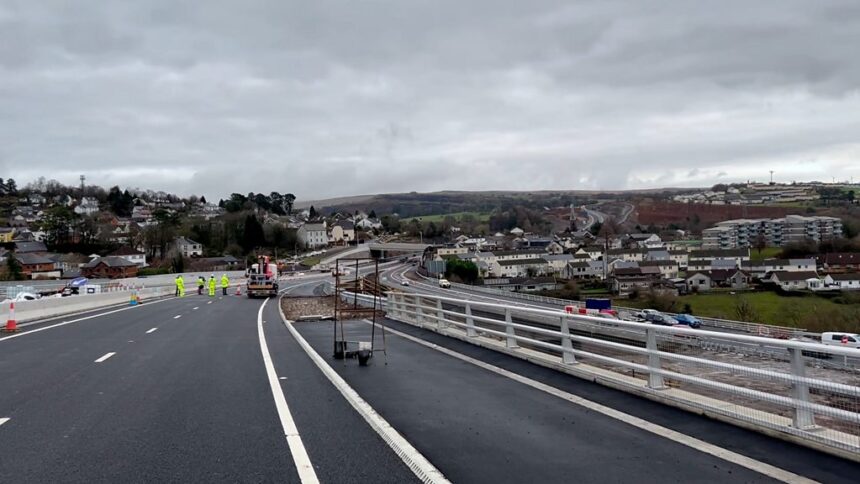
After more than two decades of extensive roadworks, the £2 billion upgrade of the A465 Heads of the Valleys road in South Wales is finally set to be completed, marking the end of one of the UK’s most expensive and complex infrastructure projects of the 21st century. The ambitious roadworks project, which began in 2002 during Tony Blair’s premiership, sought to modernize and improve the key road that links Swansea with Monmouthshire, making it a dual carriageway to ease congestion and improve safety for drivers.
Originally part of an upgrade plan conceived by the Conservative government under Margaret Thatcher in 1990, the A465 roadwork project has faced numerous delays, setbacks, and challenges. What was initially seen as a potential solution to bring prosperity to one of the UK’s most deprived areas turned into a long-running saga of rising costs, environmental concerns, and construction difficulties. For local residents, the project became known as the “road from hell,” with many frustrated by the ongoing disruptions and the hardships caused by the extended works.
The road, which stretches for 28 miles (45 km), had already been equipped with two lanes in some sections before the upgrade, but persistent issues with congestion, frequent accidents, and the high volume of traffic led to the decision to widen and improve it. The ultimate goal was to create a safer, more efficient route that could support local communities and provide a resilient alternative route to the often-congested M4 motorway, particularly at the Newport junction.
In the years since the project began, the construction process has been plagued by numerous challenges. Among these were unexpected costs, severe weather conditions, the devolution of powers to the Welsh government, and, more recently, the global pandemic. There were also environmental concerns about the impact of roadworks on local wildlife, and these have been met with efforts to plant over 285,000 trees, as well as relocating species such as bats, dormice, and great crested newts. Furthermore, engineers faced the tough task of constructing new bridges and junctions while also maintaining road traffic flow.
The scale of the project was immense, with nearly 70 structures built, including more than 40 new bridges and 12 new junctions. The construction has also included almost nine miles (14 km) of new walking and cycling routes. It has been a daunting task, involving moving thousands of tons of earth, building on unsuitable terrain, and navigating challenging environmental conditions. In fact, the final two sections of the roadworks, now nearing completion, are expected to cost £1.4 billion, far exceeding initial estimates.
Despite the massive costs and delays, the Welsh government remains optimistic that the completion of the road will significantly benefit the local communities in the Heads of the Valleys area. The region, once a thriving coal mining hub, has suffered from economic decline since the mines closed in the 1980s and early 1990s. The Welsh transport minister, Ken Skates, emphasized that the A465 upgrade would help raise the prospects of these communities, providing much-needed connections to larger economic centers, easing transportation for local businesses, and creating jobs.
However, the project’s funding and execution have not been without controversy. The total cost of the entire A465 project has soared to around £2 billion, much higher than originally projected. The Welsh government has faced criticism for the use of the Mutual Investment Model (MIM), a funding method in which the Welsh government will pay around £40 million annually for 30 years to finance the final stage of the roadworks. This has raised concerns among critics, including Plaid Cymru, who argue that the approach is a waste of public money and unfairly benefits private firms.
The A465 upgrade has also faced political controversy, particularly after Brexit, which impacted the funding mechanisms previously available to the project. The loss of EU funding has created additional financial strain, and the project has had to be financed with significant borrowing. The M4 relief road, another significant infrastructure project in Wales, was also scrapped in 2019 due to its exorbitant cost and environmental concerns, highlighting the Welsh government’s challenges in balancing economic growth and environmental preservation.
Locally, the project has had a mixed reception. Some residents of the affected areas, particularly those living near Merthyr Tydfil, have expressed frustration with the prolonged roadworks. For them, the daily disruptions and the ongoing construction have made life difficult. One local business owner reported a 50% drop in trade due to the roadworks, while others, like Tanya Houghton, believe the project will ultimately be worth the hassle.
While the long delays and spiraling costs have undoubtedly taken their toll, the road’s completion is seen by many as a beacon of progress. The infrastructure improvements are expected to have lasting economic benefits for the region, creating thousands of new jobs and offering a much-needed economic boost. The project has also provided valuable opportunities for local businesses, many of which have expanded thanks to the ongoing construction.
Looking ahead, Welsh officials remain hopeful that the completed A465 road will not only provide better connectivity for the local communities but also relieve pressure on the M4 and create new opportunities for businesses in South Wales. The lessons learned from this challenging project will likely shape future infrastructure plans in the region. Whether the benefits of the roadworks justify the cost and inconvenience remains a question, but one thing is certain: the A465 upgrade will be a defining chapter in the history of Welsh infrastructure development.