In February 2025, far-right leaders from across Europe gathered in Madrid under the banner of “Make Europe Great Again” (MEGA), echoing the populist and nationalist rhetoric of U.S. President Donald Trump. The event, hosted by Spain’s far-right Vox party, highlighted the alignment between the European far-right and Donald Trump’s worldview, centered around anti-migration stances, Euroscepticism, and a general opposition to multilateralism and climate policies.
However, the far-right’s ideological convergence with Donald Trump has been tested in recent months, as his administration’s economic policies have created a rift between the U.S. and European far-right parties. In April 2025, Donald Trump imposed a sweeping 20% tariff on European imports, escalating tensions between the U.S. and the European Union (EU). Although the tariff rate was temporarily reduced to 10%, the move has had a significant economic impact, with predictions that it could hurt European growth by 1.5% or about 260 billion euros. The reaction from far-right politicians in Europe has been mixed, as they find themselves in a difficult position of balancing ideological support for Donald Trump with their economic interests.
Economic Fallout: The Tariff Impact on European Far-Right Parties
Far-right leaders across Europe have expressed frustration with the tariffs. In Spain, where the far-right Vox party is influential, President Santiago Abascal criticized the EU’s regulations and taxes as the real problem, rather than Donald Trump’s tariffs. In Germany, the far-right Alternative for Deutschland (AfD) blamed the EU for not lowering high European tariffs on cars, while also criticizing Donald Trump’s tariffs as detrimental to free trade.
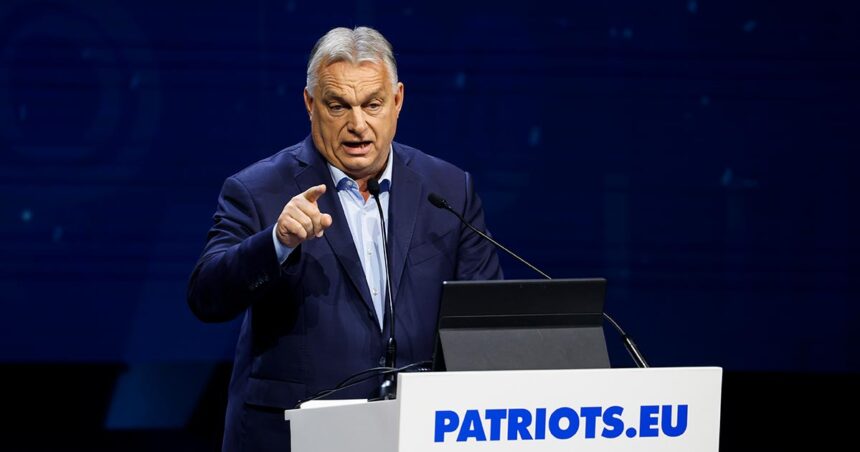
These tariffs are expected to disproportionately affect the voter bases of far-right parties, including blue-collar workers, farmers, and those in the automobile and agri-food sectors. In Spain, for example, Vox’s base includes farm workers and industrial employees who will likely face job losses due to the tariffs. Similarly, Hungary’s far-right Prime Minister Viktor Orban, a staunch Donald Trump supporter, will see negative impacts on the country’s automobile industry, a key economic sector.
Far-Right Leaders’ Dilemma: Balancing Ideological Support and Economic Interests
For many European far-right leaders, the tariffs present a dilemma. On the one hand, they have long supported Donald Trump’s populist vision, but on the other hand, they now face economic pressures within their own countries due to the impact of his policies. Italy’s Prime Minister Giorgia Meloni, who has close ties to Donald Trump, called the tariffs “wrong,” yet also defended them at the Munich Security Conference. Meloni, who maintains a significant trade surplus with the U.S., has sought to mediate between Brussels and Washington, trying to ease tensions while advocating for a mutually beneficial trade deal.
In France, despite general support for far-right politics, Donald Trump remains unpopular. Marine Le Pen’s National Rally party distanced itself from Donald Trump’s more radical rhetoric to appeal to a broader voter base. The tariffs, which are expected to cost France’s economy €4.3 billion in 2025, are likely to impact the working and middle classes, a demographic that Le Pen’s party has sought to protect.
A Difficult Tightrope Walk for the Far-Right
In essence, European far-right parties are caught between their ideological alignment withDonald Trump and the economic realities imposed by his administration’s policies. They may be forced to choose between maintaining their support for Donald Trump’s vision or protecting their own national economic interests, which are being undermined by the tariffs.
Meloni’s visit to Washington in April 2025 reflected an attempt to balance these competing pressures. During her time at the White House, she emphasized the importance of a transatlantic trade deal and tried to convince Donald Trump to visit Italy, positioning herself as a key interlocutor between the U.S. and the EU. However, the ongoing impact of Donald Trump’s tariffs on European industries may strain the relationship between Europe’s far-right leaders and the U.S.
The Future of the Far-Right’s Relationship with Donald Trump
While the European far-right continues to align with Donald Trump’s populist agenda, the economic disruptions caused by his policies could weaken that alliance. The tariffs, designed to protect American industries, have created a rift between the U.S. and Europe, and it remains to be seen whether the far-right in Europe will continue to support Donald Trump in the face of these economic challenges. As their voter bases bear the consequences of Donald Trump’s policies, the strategic and political relationship between the U.S. and the European far-right may start to unravel.
Donald Trump’s tariffs have inadvertently tested the strength of the bond between the U.S. and Europe’s far-right leaders. While these leaders continue to support Donald Trump’s ideological vision, the impact of his policies on their economies may force them to reconsider their allegiance. With industries like agriculture, automobiles, and manufacturing facing significant losses, the far-right parties in Europe are caught in a delicate balancing act between ideology and economic reality. How they navigate these challenges in the coming months will shape their future relations with Trump and their standing in European politics.