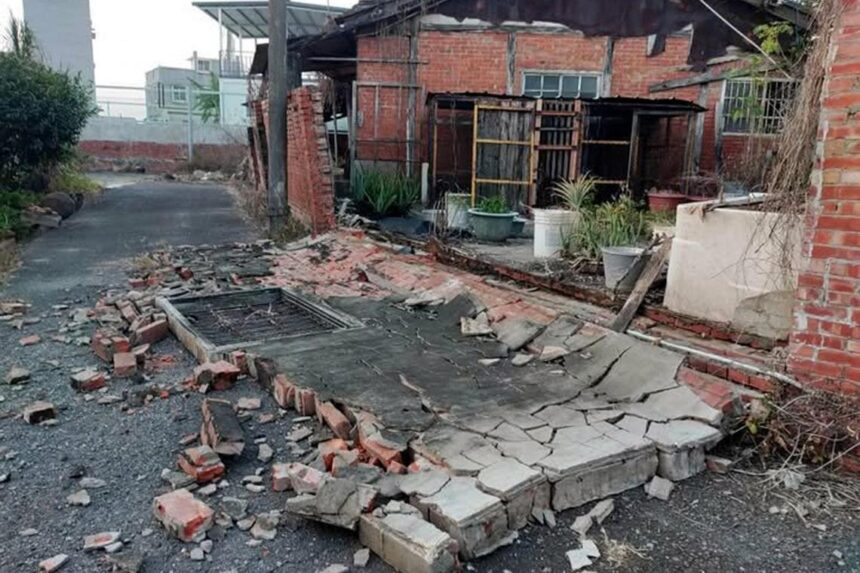
On Tuesday, Taiwan was struck by a powerful 6.0 magnitude earthquake, resulting in 27 injuries and significant structural damage across the island. According to the US Geological Survey (USGS), the earthquake hit shortly after midnight, with tremors that lasted for nearly a minute in the capital city of Taipei. Local authorities reported that the quake caused ceilings in homes to collapse, leading to widespread damage, particularly in the southern regions of Taiwan.
The epicenter of the earthquake was located 12 kilometers (7.5 miles) north of Yujing, a district in southern Taiwan known for its mango cultivation. The USGS also stated that the tremor was shallow, which likely contributed to the extent of the damage. The earthquake’s impact was particularly evident in the nearby Nanxi district, where a video posted on Facebook and later verified by AFP showed local fire authorities rescuing three individuals, including a child, who had become trapped inside a collapsed house. Other homes in the area also suffered ceiling collapses.
The earthquake’s aftermath saw various other injuries and incidents, with one person reported to have been hurt by falling debris. Authorities also carried out rescues in elevators, where two individuals were trapped after the tremors disrupted the building’s systems. Despite the widespread damage, the Nanxi district fire brigade reported that there were no major structural failures, and the overall situation was not as dire as it could have been.
Taiwan’s health ministry confirmed that a total of 27 people had been injured during the quake. Meanwhile, Taiwanese tech giant TSMC, known for its advanced semiconductor manufacturing, evacuated workers from some of its factories located in central and southern Taiwan as a precautionary measure. The earthquake also caused some disruptions in Chiayi City, north of Yujing, where footage shared on social media platforms such as Threads showed shelves swaying and products falling to the ground.
Taiwan is located on the Pacific Ring of Fire, an area known for its high seismic activity due to the collision of two tectonic plates. This makes the island highly susceptible to earthquakes, with frequent tremors occurring throughout the year. The 6.0-magnitude earthquake that struck on Tuesday was a reminder of Taiwan’s vulnerability to such natural disasters, although the country has made significant strides in strengthening its infrastructure and response systems to better withstand seismic events.
In fact, Taiwan has experienced a number of major earthquakes in recent years. The last major earthquake to hit the island occurred in April 2024, when a deadly 7.4-magnitude tremor killed at least 17 people and caused widespread destruction in the Hualien region. This earthquake, which was the strongest in 25 years, triggered landslides and caused extensive damage to buildings. It served as a stark reminder of the potential devastation caused by earthquakes in Taiwan, which had previously experienced a similarly powerful 7.6-magnitude earthquake in 1999 that resulted in nearly 2,400 deaths.
Since then, Taiwan has taken considerable steps to mitigate the impact of future earthquakes. Building codes have been updated to incorporate advanced quake-resistant construction techniques, such as the use of steel bars that allow buildings to sway with the movement of the ground, thus reducing the risk of collapse during an earthquake. Taiwan has also developed a state-of-the-art early warning system, which can notify the public of potentially dangerous seismic activity within seconds of detection. This system has been further enhanced in recent years, with improvements including the use of smartphones and high-speed data connections to provide real-time alerts to residents, even in the most remote parts of the island.
Despite the damage caused by Tuesday’s earthquake, Taiwan’s preparedness and response systems appear to have helped minimize casualties and structural failures. The island’s history of earthquake resilience, coupled with its cutting-edge early warning technology, has played a critical role in saving lives and reducing the impact of seismic events. As Taiwan continues to improve its infrastructure and disaster preparedness, it remains a leader in the global effort to mitigate the effects of natural disasters, particularly earthquakes.
As rescue operations continue and authorities assess the full extent of the damage, Taiwan’s residents remain resilient, relying on the island’s robust safety measures to navigate the challenges posed by the frequent seismic activity in the region. With the earthquake having left a lasting impact on the island, Taiwanese citizens and officials alike are already focused on recovery efforts and reinforcing the country’s preparedness for future tremors.