

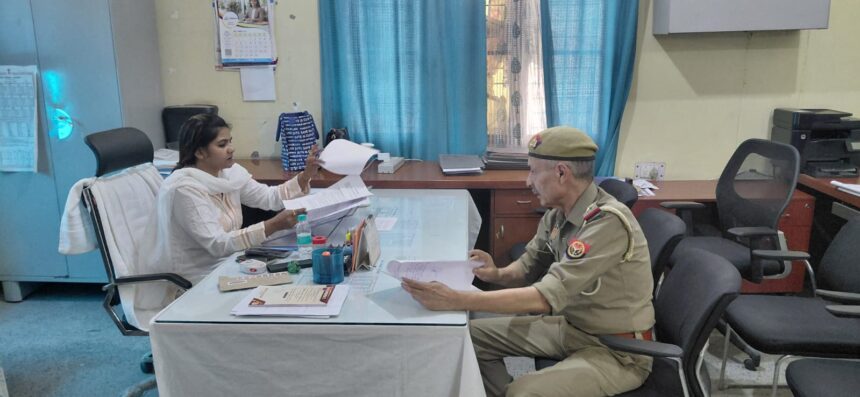
Preparations have intensified in Gautam Buddh Nagar for the upcoming “Samadhan Samaroh” Special Lok Adalat scheduled to be held from August 21 to August 23, 2026, at the Supreme Court of India. Following directions issued by the National Legal Services Authority and the Uttar Pradesh State Legal Services Authority, a review meeting was organized to ensure the smooth and successful conduct of the event.
The meeting focused primarily on improving the service of notices to parties involved in identified cases and strengthening awareness efforts among the public regarding the benefits of the special Lok Adalat.
Focus on Timely Notice Service for Identified Cases
During the meeting, officials associated with the summons cell discussed strategies to ensure maximum notice delivery in cases selected for the “Samadhan Samaroh” Special Lok Adalat. Authorities emphasized that timely communication with litigants is essential for ensuring higher participation and effective settlement of disputes.
Officials were instructed to closely monitor the progress of notice delivery and maintain regular coordination with all concerned parties. The administration aims to ensure that no eligible case is left out due to delays or procedural lapses.
The Special Lok Adalat is being organized with the objective of resolving pending disputes through mutual settlement and consensus. Authorities believe the initiative can significantly reduce the burden on courts while also providing faster and cost-effective relief to citizens.
Awareness Campaign to Reach More Citizens
A major part of the discussion during the review meeting centered around public awareness campaigns. Officials were directed to ensure extensive publicity in both urban and rural areas so that more people become aware of the advantages of resolving disputes through Lok Adalats.
Legal experts have often highlighted the importance of Lok Adalats in making the justice delivery system simpler, faster, and more accessible. Such forums provide litigants an opportunity to settle disputes amicably without prolonged legal proceedings.
Cases related to family disputes, bank recovery matters, electricity and water bill disputes, motor accident claims, and various civil issues are commonly resolved through Lok Adalats. The process not only saves time but also reduces financial burden on the parties involved.
Authorities also plan to educate citizens about the finality of Lok Adalat settlements, where decisions reached through mutual agreement are generally binding and help avoid lengthy appeals and litigation.
Administrative Preparations Underway
The review meeting also highlighted the important role of the summons cell in ensuring the success of the event. Officials were instructed to avoid delays and ensure efficient service of notices in all identified cases.
Administrative preparations have already begun at multiple levels to ensure smooth coordination during the three-day event. Responsibilities are being assigned to concerned departments and staff members to facilitate effective implementation.
Officials believe that greater participation in the Special Lok Adalat can lead to faster disposal of pending cases and encourage amicable settlements among disputing parties.
The meeting was attended by Shivani Rawat, Secretary of the District Legal Services Authority, along with Summons Cell In-charge Rohtash Singh. Various operational and awareness-related aspects were reviewed during the session.
Lok Adalats Emerging as Effective Dispute Resolution Platforms
Lok Adalats are increasingly being promoted across India as an alternative dispute resolution mechanism capable of reducing pressure on conventional courts. The “Samadhan Samaroh” Special Lok Adalat is being viewed as another significant initiative in this direction.
Experts believe that with proper awareness and timely communication, a large number of disputes can be resolved outside traditional courtroom proceedings. This not only benefits litigants but also strengthens the efficiency of the justice delivery system.
The upcoming event is expected to provide relief to many parties seeking quicker resolution of disputes through settlement-based legal mechanisms.