
Hosabale on India Pakistan Relations: RSS Calls for Civil Society Engagement and Open Dialogue Channels
Top Rashtriya Swayamsevak Sangh (RSS) functionary Rashtriya Swayamsevak Sangh General Secretary Dattatreya Hosabale has stated that India must continue to maintain a window for dialogue with Pakistan, emphasizing that people-to-people contact and civil society engagement remain key to breaking the long-standing diplomatic deadlock between the two countries.
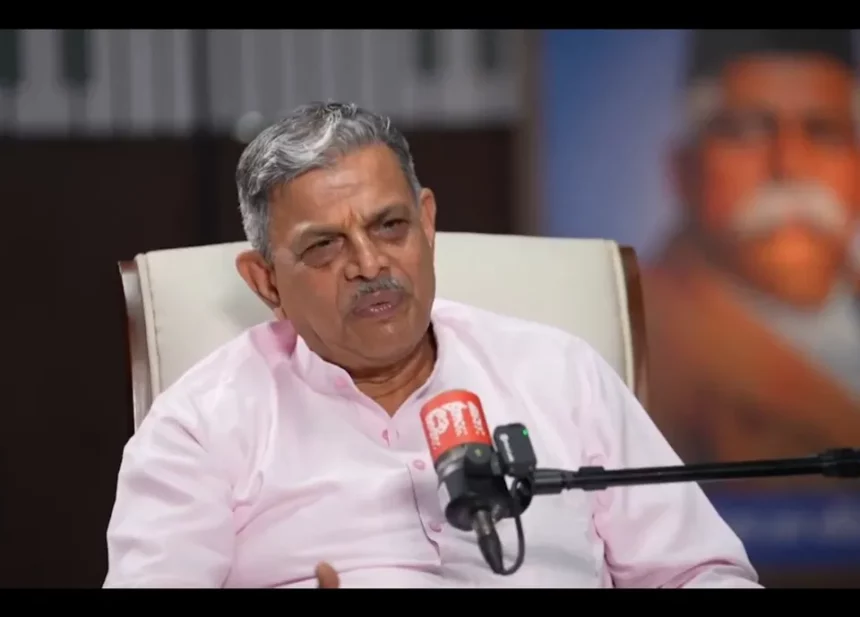
Speaking in an interview with PTI Videos, Hosabale said that while national security and sovereignty remain non-negotiable priorities for India, diplomatic engagement channels should not be completely closed. He argued that dialogue should remain open even when official relations face repeated setbacks due to cross-border tensions and terrorism-related concerns.
His remarks come at a time when India-Pakistan relations continue to remain strained, with limited formal engagement and recurring security concerns shaping the bilateral landscape.
People-to-People Contact as Core Diplomatic Strategy
Hosabale emphasized that civil society interactions could play a crucial role in improving relations between India and Pakistan. He suggested that academicians, sportspersons, scientists, and community leaders should take the lead in maintaining engagement between the two societies, even when political relations remain difficult.
According to him, people-to-people contact represents a more stable and sustainable form of diplomacy compared to state-level negotiations, which often get affected by geopolitical tensions and security incidents.
He said that cultural and historical linkages between the two nations provide a foundation for continued interaction, even if official relations are strained.
The RSS leader highlighted that civil society engagement can help preserve communication channels and reduce mistrust over time, potentially creating conditions for future diplomatic breakthroughs.
Call for Continued Dialogue Despite Security Concerns
While advocating for dialogue, Hosabale also acknowledged the security challenges that India faces in its relationship with Pakistan. He pointed to repeated incidents of terrorism and cross-border attacks as major obstacles to improving bilateral relations.
Referring to past attacks such as 26/11 Mumbai attacks, Pulwama, and other incidents, he said that India has consistently faced security challenges that complicate diplomatic engagement.
However, he maintained that despite these concerns, complete disengagement is not a viable long-term strategy. Instead, he suggested that India should maintain limited diplomatic and cultural channels to ensure that communication does not break down entirely.
His remarks reflect a nuanced position that balances national security concerns with the need for continued engagement at non-governmental levels.
Trade, Visa, and Diplomatic Channels Should Remain Open
One of the key points highlighted by Hosabale was the importance of keeping trade, commerce, and visa issuance processes functional between India and Pakistan. He argued that these mechanisms help maintain minimal but essential communication channels between the two countries.
He stated that even when political relations are strained, economic and social exchanges should not be completely halted, as they help preserve avenues for dialogue and interaction.
According to him, diplomatic relations have historically been maintained at some level precisely to ensure that communication channels remain open, even during periods of tension.
This approach aligns with the idea that limited engagement can act as a foundation for rebuilding trust over time, even in difficult geopolitical circumstances.
Criticism of Pakistan’s Political and Military Establishment
Hosabale also made strong observations regarding Pakistan’s political and military leadership, stating that they have lost India’s confidence due to repeated incidents of hostility and terrorism.
He said that while engagement should continue, the responsibility for improving relations lies significantly with Pakistan’s leadership, which must take steps to address India’s security concerns.
His remarks reflect long-standing concerns in India regarding cross-border terrorism and instability, which have frequently disrupted diplomatic efforts between the two countries.
Despite these criticisms, he maintained that dialogue should not be completely abandoned, especially at the societal level.
Role of Civil Society in Track-Two Diplomacy
Hosabale’s statement places significant emphasis on the role of civil society in what is often referred to as “track-two diplomacy.” This form of engagement involves non-governmental actors such as academics, cultural figures, journalists, and sports personalities engaging in dialogue to build trust and mutual understanding.
He suggested that such informal interactions could help bridge gaps that formal diplomacy has been unable to resolve.
Track-two diplomacy has historically played a role in easing tensions between nations with strained relations, and Hosabale’s comments indicate support for expanding such initiatives between India and Pakistan.
He argued that civil society actors are often better positioned to maintain dialogue during periods when official diplomatic channels are limited or inactive.
Balancing Security and Engagement
The RSS leader’s remarks highlight the delicate balance between maintaining national security and pursuing diplomatic engagement. While acknowledging India’s security concerns, he stressed that complete isolation of Pakistan is not a sustainable long-term policy.
Instead, he advocated for a calibrated approach that allows limited interaction while ensuring that national interests and security remain protected.
This perspective reflects a broader debate within Indian strategic and policy circles about how to manage relations with Pakistan in the context of recurring tensions and security challenges.
Historical Context of India-Pakistan Relations
India and Pakistan have shared a complex and often tense relationship since their independence in 1947. Multiple wars, ongoing territorial disputes, and incidents of cross-border terrorism have significantly shaped bilateral relations.
Despite these challenges, both countries have periodically engaged in dialogue processes aimed at improving ties. However, such efforts have often been disrupted due to security incidents or political developments.
Hosabale’s remarks suggest that despite repeated setbacks, maintaining channels of communication remains essential for any future reconciliation or stability.
Diplomatic Implications of the Statement
The statement by a senior RSS functionary carries significance given the organization’s influence in India’s socio-political landscape. While the RSS is not a governmental body, its views are often considered important in shaping broader ideological and policy discussions.
His comments may contribute to ongoing debates about India’s Pakistan policy, particularly regarding whether engagement should be limited or expanded at various levels.
By emphasizing civil society engagement, Hosabale has highlighted an alternative approach to traditional state-centric diplomacy.
Conclusion
The remarks by Rashtriya Swayamsevak Sangh General Secretary Dattatreya Hosabale underscore the continuing debate over how India should engage with Pakistan amid persistent security concerns and diplomatic challenges.
While acknowledging the difficulties posed by terrorism and political instability, he emphasized the importance of keeping dialogue channels open and strengthening people-to-people contact as a long-term strategy for peacebuilding.
His call for civil society involvement, continued trade links, and sustained diplomatic communication reflects a broader view that complete disengagement is not a viable solution, even in strained bilateral relationships.