

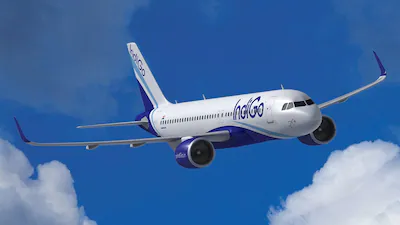
Air India, Air India Express and IndiGo will fully restore Doha operations from May 1, reviving critical India Qatar air connectivity after prolonged disruption.
India’s aviation sector is set for a major operational recovery as leading carriers Air India, Air India Express and IndiGo prepare to fully resume scheduled flight services to Doha’s Hamad International Airport from May 1 2026. This marks a crucial turning point in restoring one of the most important international air travel corridors connecting India and the Gulf after nearly two months of severe disruption caused by escalating geopolitical tensions across West Asia.
The resumption of full scale operations follows a prolonged period of restricted regional aviation triggered by the February 28 joint military offensive involving the United States and Israel against Iranian leadership and nuclear infrastructure. This military escalation rapidly evolved into a broader conflict, significantly disrupting commercial aviation routes, regional airspace accessibility and global travel logistics.
Qatari airspace, despite the country’s diplomatic role as a regional mediator, remained heavily restricted for much of March and April. Hamad International Airport, one of the world’s most strategically significant transit hubs, was forced to operate under severe limitations, focusing primarily on emergency evacuations, humanitarian missions and select essential services.
For India, the disruption of Doha services created major challenges for millions of passengers. Qatar serves as a crucial aviation gateway for Indian migrant workers, business travelers, families, students and international transit passengers connecting to destinations across Europe, North America, Africa and the Middle East.
The reopening of full operations beginning May 1 therefore represents a substantial restoration of connectivity not only for bilateral travel between India and Qatar but also for broader global passenger mobility.
According to official diplomatic communication from the Embassy of India in Doha, the resumption is part of a coordinated multinational effort involving aviation regulators, security authorities and international insurers to stabilize regional flight operations.
Air India, Air India Express and IndiGo are expected to restore services across multiple high demand routes linking Doha with several Indian metropolitan cities and regional centers. These restored operations will significantly strengthen passenger movement, labor migration flows, cargo logistics and economic activity.
The importance of these routes is particularly high given the vast Indian expatriate population in Qatar and neighboring Gulf nations. Indian workers represent one of the largest foreign communities in the Gulf, and reliable aviation connectivity remains essential for employment cycles, remittances, family reunification and trade.
The broader geopolitical backdrop remains complex. The temporary reopening has been made possible largely due to a fragile ceasefire brokered in Islamabad during April and later extended through diplomatic efforts involving U.S. President Donald Trump.
This ceasefire created a narrow but critical window for insurers and aviation authorities to cautiously approve the gradual restoration of commercial air operations.
Commercial aviation insurance providers had previously imposed major restrictions on flights operating through conflict affected regions due to heightened risks involving missile strikes, airspace closures and geopolitical unpredictability. Without sufficient insurance coverage, airlines faced prohibitive financial and operational barriers.
Thus, the restoration of Doha operations reflects both improved regional security coordination and renewed confidence among international aviation stakeholders.
For passengers, the return of services offers substantial relief after months of cancellations, rerouting and uncertainty. Travelers have been strongly advised to remain in close communication with airlines regarding schedules, booking confirmations and terminal details, as operational flexibility remains necessary under current security conditions.
Economically, the reopening carries significant importance for both India and Qatar. The Gulf aviation market represents one of India’s largest international travel sectors, supporting labor migration, tourism, trade and strategic economic partnerships.
The return of regular passenger operations is also expected to significantly strengthen cargo services. Hamad International Airport functions as a major logistics hub for international goods movement, including pharmaceuticals, perishables, electronics and industrial supplies. Normalized air traffic will therefore support broader supply chain recovery and commercial efficiency.
Qatar’s Hamad International Airport holds exceptional strategic importance due to its advanced infrastructure, global route network and role as a key connector between continents. Its restricted operations over the past two months had ripple effects across international aviation systems.
For India’s airlines, restoring Doha routes also offers vital financial benefits. Gulf corridors remain among the most commercially important sectors for Indian carriers due to consistent passenger demand and strong economic ties.
Despite the positive momentum, significant risks remain. The regional security environment continues to be fragile, with potential threats including renewed conflict escalation, ceasefire instability, airspace restrictions and fluctuating insurance frameworks.
Airlines are therefore likely to maintain adaptive scheduling strategies based on evolving geopolitical developments.
Looking ahead, aviation experts will closely monitor several key indicators:
Passenger traffic recovery
Regional security stability
Insurance premium normalization
Cargo volume growth
Expanded Gulf route restoration
If stability improves further, broader aviation normalization across West Asia may accelerate during 2026.
The resumption of full Indian airline operations to Doha symbolizes more than a transportation milestone. It reflects the intersection of diplomacy, security, economics and global mobility in one of the world’s most geopolitically sensitive regions.
For Indian travelers, workers and businesses, May 1 2026 marks the restoration of an essential international lifeline. For airlines, it offers renewed market opportunity and operational recovery. For the broader region, it represents cautious progress toward normalization after one of the most disruptive aviation crises in recent years.
As India Qatar connectivity strengthens once again, the reopening serves as a reminder of aviation’s critical role in sustaining economic resilience and international engagement even amid profound geopolitical uncertainty.